Chinese Breakfast: What People Actually Eat Every Morning
Forget cereal and cold sandwiches — Chinese breakfast is hot, savory, and eaten on the street. Here's what 1.4 billion people really eat in the morning, from someone who grew up on Hunan rice noodles.
If you’re from Finland or anywhere in the Nordics, breakfast probably means something quiet and private. Toast, porridge, maybe some yoghurt. Coffee. At home. Alone or with family, before heading out the door.
In China, breakfast is the opposite of that. It’s hot. It’s savory. It’s loud. And most importantly — you eat it outside.
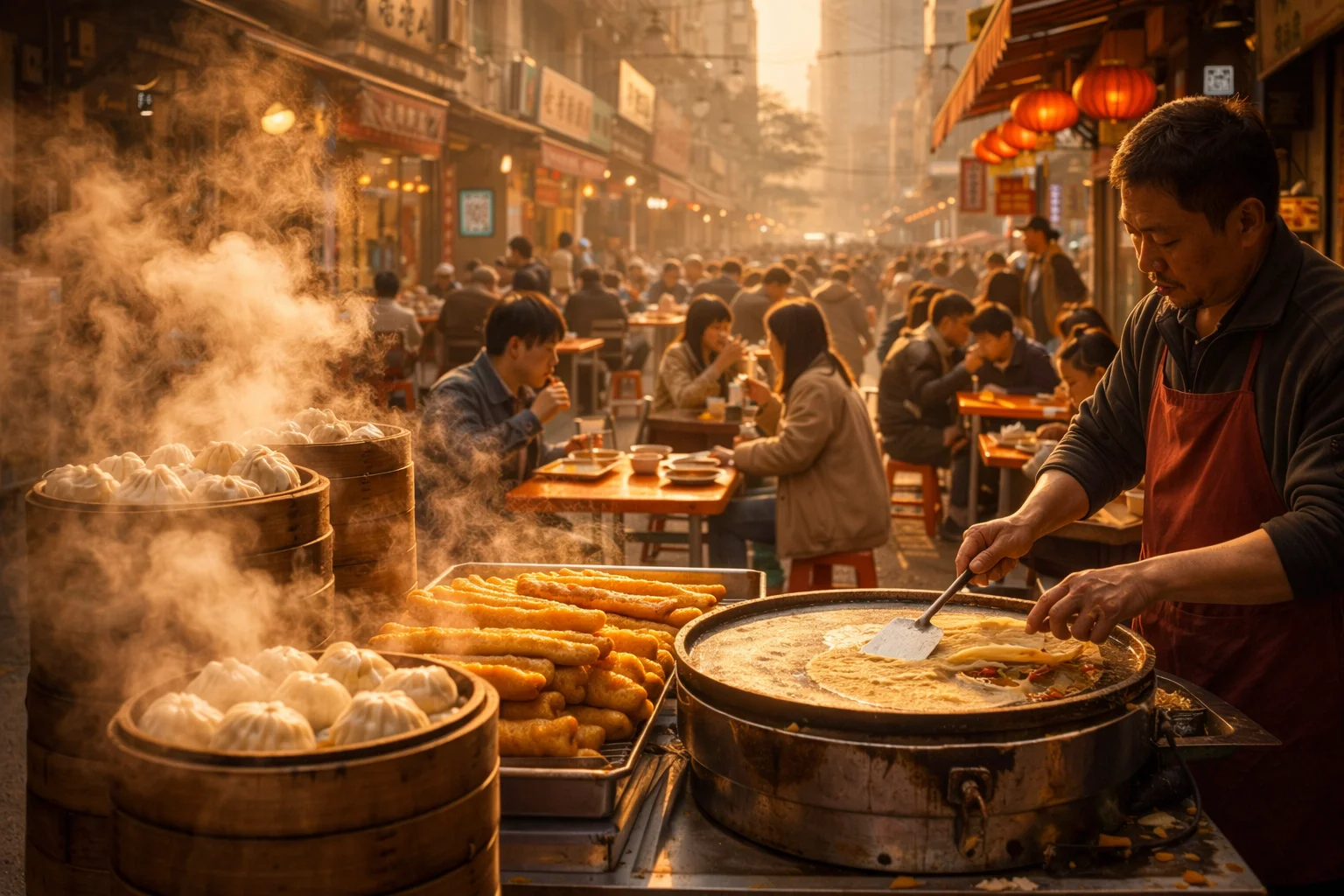
That’s the first thing that surprises every Nordic visitor I know. In China, breakfast is not a home meal. It’s a street meal, a stall meal, a tiny-restaurant-with-plastic-stools meal. Every morning, the sidewalks come alive with vendors steaming buns, flipping crepes, and ladling noodles. The whole neighbourhood is out eating together at 7 AM. It’s social, fast, cheap, and — honestly — one of the things I miss most about home.
I grew up in Hunan province, where breakfast meant a bowl of spicy rice noodles and a couple of golden youtiao before school. Here’s what Chinese breakfast actually looks like.
Jianbing (煎饼) — the king of street breakfast
If China had a national breakfast, jianbing would be it. It’s a thin, crispy crepe made fresh on a round griddle right in front of you. The vendor cracks an egg onto the batter, spreads it thin, adds scallions, cilantro, and sauces, then folds in a crispy cracker (薄脆) for crunch. The whole thing takes about two minutes from start to hand.
Jianbing is the Chinese equivalent of grabbing a coffee on your morning commute — except it’s a full meal. It’s savoury, satisfying, portable, and costs next to nothing (usually 6–10 RMB, under €1.50). You eat it while walking, on the bus, or standing at the stall watching the next one being made.
Every vendor has their own style. Some add lettuce, some offer ham or sausage, some go heavy on the chili sauce. Find a stall with a queue — that’s your jianbing person.
Youtiao + Doujiang (油条 + 豆浆) — my personal favourite
Youtiao are long, golden sticks of deep-fried dough — light, airy, slightly chewy, and completely addictive. They’re one of the oldest breakfast foods in China, and they remain one of the most popular. I love them. I grew up eating them almost every morning in Hunan, and nothing in Finland has come close to replacing them.
The classic pairing is youtiao dipped into doujiang — warm, freshly made soy milk, either sweetened or savoury (with pickled vegetables and a splash of vinegar). It’s the Chinese equivalent of pulla and coffee, except it’s been around for centuries longer.
You can also eat youtiao stuffed inside a jianbing, wrapped in a rice roll (饭团), or just on their own dipped in congee. They’re everywhere — from street carts to sit-down breakfast shops — and they cost almost nothing.
If you try one thing on this list as a tourist, make it this. Grab a youtiao, dip it in hot doujiang, and eat it standing on a busy sidewalk at 7 AM. That’s Chinese breakfast at its purest.
Baozi (包子) — steamed buns, everywhere
Baozi are soft, pillowy steamed buns filled with pork, vegetables, or sweet pastes (red bean, custard). They come stacked in bamboo steamers, and the sight and smell of a baozi stall on a cold morning is one of those things that just feels like home.
The most common filling is pork with cabbage or chives, but variations are endless. Every region has its own style. The ones from street vendors and small shops are typically large, filling, and cost 1–3 RMB each (under €0.50).
Don’t confuse baozi with xiaolongbao (小笼包) — those are the delicate, soup-filled dumplings from Shanghai. They’re related but different: baozi are bigger, fluffier, and meant to be grabbed on the go. Xiaolongbao are a sit-down experience.
Baozi chains like Qingfeng Baozi (庆丰包子) are found across Chinese cities and are a safe, easy option for tourists who want a reliable breakfast without needing to speak Chinese.
Hunan Rice Noodles (湖南米粉) — what I grew up on
In my home province of Hunan, breakfast means mifen — rice noodles. Round, smooth, slippery noodles served in a rich, savoury broth, topped with pickled beans, chopped peanuts, chili oil, and often stewed beef or pork. It’s spicy enough to wake you up better than any coffee.
The routine is simple: you walk into a small noodle shop, tell the vendor what toppings you want (or just say “the usual”), they ladle the noodles and broth together in seconds, and you sit on a plastic stool and eat. The whole thing takes ten minutes. It costs around 8–15 RMB (roughly €1–2).
Every town in Hunan has its own noodle style. Changsha is famous for its round rice noodles in meat broth. Hengyang does a fish-based version. Changde uses flat, wide noodles with a thicker sauce. Arguments about which city has the best mifen are a serious matter in Hunan — do not pick sides unless you’re prepared to defend your choice.
Rice noodle breakfasts aren’t unique to Hunan. Guilin mifen from Guangxi is famous nationwide, Yunnan mixian (crossing-the-bridge noodles) is a thing of beauty, and Guizhou has its own intensely flavoured versions. Across southern China, noodles for breakfast is simply how mornings work.
Congee (粥) — the comfort bowl
Congee — called zhou in Mandarin — is rice porridge, slow-cooked until the grains dissolve into a thick, silky soup. It’s the Chinese equivalent of Finnish puuro (porridge), but taken in a completely different direction.
Plain congee is mild and gentle — the food Chinese families turn to when someone is sick, tired, or just needs comfort. But breakfast congee is usually served with toppings: century egg and lean pork (皮蛋瘦肉粥) is the most classic version, but you’ll also find sweet potato congee, pumpkin congee, and dozens of regional variations.
It comes with side dishes — pickled vegetables, fermented tofu, salted duck eggs, or a plate of youtiao for dipping. The combination of bland, warm congee with sharp, salty sides is one of those things that sounds strange but works perfectly.
Tea Eggs (茶叶蛋) — the convenience store staple
Walk into any convenience store or supermarket in China, and you’ll see a pot of dark brown eggs simmering near the register. These are tea eggs — hard-boiled eggs cracked and simmered in a mixture of tea, soy sauce, star anise, and spices until they develop a marbled pattern and deep, savoury flavour.
They cost almost nothing (usually 2–3 RMB), they’re portable, and they’re protein-rich. For millions of Chinese workers, grabbing a tea egg on the way to the office is as routine as grabbing a coffee is in Helsinki.
Doufu Nao (豆腐脑) — the great north-south debate
Doufu nao is silky, just-set tofu pudding served in a bowl — essentially tofu that’s barely firm enough to eat with a spoon. It’s delicate, mild, and defines one of China’s oldest culinary arguments: sweet or savoury?
In the north, doufu nao comes with savoury toppings — soy sauce, chili oil, pickled vegetables, sometimes a meat sauce. In the south, it’s sweetened with sugar syrup or ginger water. Both sides are absolutely convinced the other version is wrong. It’s China’s equivalent of the Nordic salmiakki divide — lighthearted on the surface, deadly serious underneath.
If you try it, just order whatever the local version is. You can pick a side later.
How breakfast works in practice
The biggest cultural difference for Nordic visitors isn’t the food itself — it’s the ritual.
In Finland, breakfast happens at home. You make it yourself. It’s private, quiet, and self-contained. In China, especially in cities, most people eat breakfast out. Not in restaurants in the Western sense, but at street stalls, hole-in-the-wall shops, and tiny breakfast joints with a few tables and plastic stools.
The morning street food economy is enormous. Vendors set up before dawn and are usually finished by 9 or 10 AM. By the time you might think about breakfast in Helsinki, the stalls are already being packed away. If you want the real experience, get out early — 7 to 8 AM is peak breakfast time.
The pace is fast. People eat quickly, often standing or perched on stools. There’s no lingering. Grab your food, eat, and go. A full Chinese breakfast — noodles or jianbing, soy milk, maybe a tea egg — rarely takes more than 15 minutes and costs under €2.
This isn’t about convenience or laziness. It’s a deeply social, community-driven way of eating. The breakfast stall is where neighbours chat, where regulars are known by name, where the rhythm of the day begins. After experiencing it, eating toast alone in your kitchen feels a little lonely.
Where to find it as a tourist
Morning street stalls are where the real breakfast happens. Walk out of your hotel before 9 AM, head toward any residential area, and follow the steam and the queues. You’ll find jianbing griddles, baozi steamers, noodle shops, and soy milk vendors within minutes.
Don’t rely on your hotel breakfast. Most Chinese hotels offer a buffet with both Western and Chinese options, but the Chinese side is often a watered-down version of the real thing. It’s fine, but it’s not the experience.
Ordering without Chinese: Point at what you want. Most breakfast stalls have their menu visible — steamers full of baozi, a griddle with jianbing being made, a pot of congee. Just point. Show one finger for one, two for two. Use your translation app for toppings or preferences. Vendors are used to gestures, and the transaction takes seconds.
Baozi chains are the easiest option if you’re nervous. They have picture menus, fixed prices, and consistent quality. Walk in, point at the steamer, pay with Alipay or WeChat, sit down.
One tip: bring cash for the smallest street stalls. Most accept mobile payment, but a few old-school vendors still prefer coins and small bills.
Chinese breakfast is one of those everyday things that tourists often miss — they sleep in, eat at the hotel, and never see the morning street life that defines how most Chinese people actually start their day. Don’t make that mistake. Set an alarm, step outside, and eat like a local. It might be the best meal of your trip.
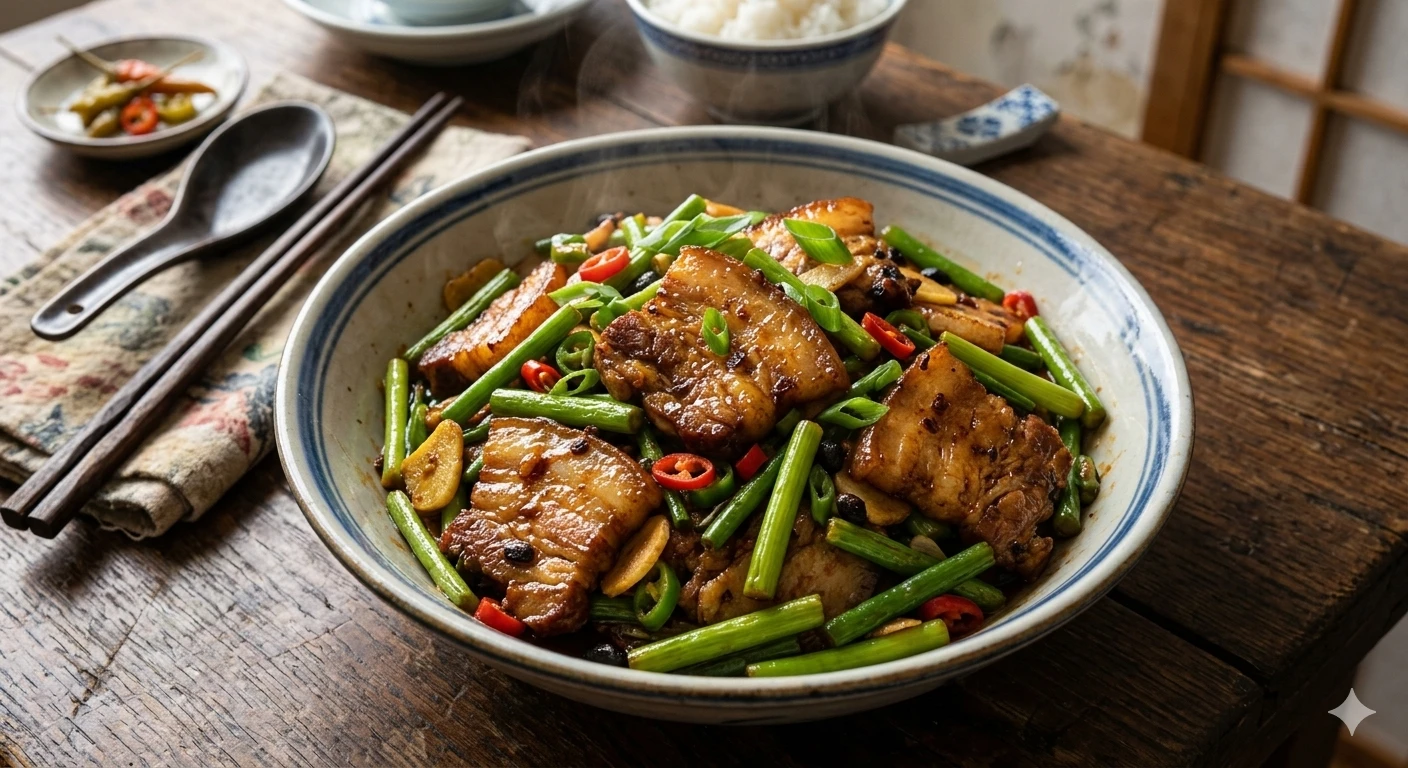
Planning your first visit? Read our practical first-trip guide for everything you need to know about payments, transport, and navigating China. And if spicy food is calling you, check out Hunan’s most famous dish — twice-cooked pork.