Guilin and Yangshuo: The Landscape That Doesn't Look Real
Karst peaks, mirror rivers, and caves lit like dreams. Guilin and Yangshuo are the China you've seen in paintings — except it actually looks like that.
There is a Chinese saying that every schoolchild learns: 桂林山水甲天下 (Guìlín shānshuǐ jiǎ tiānxià) — “Guilin’s landscapes are the finest under heaven.” It is the kind of phrase that sounds like tourist-board exaggeration. And then you go there, and you realise it might be an understatement.
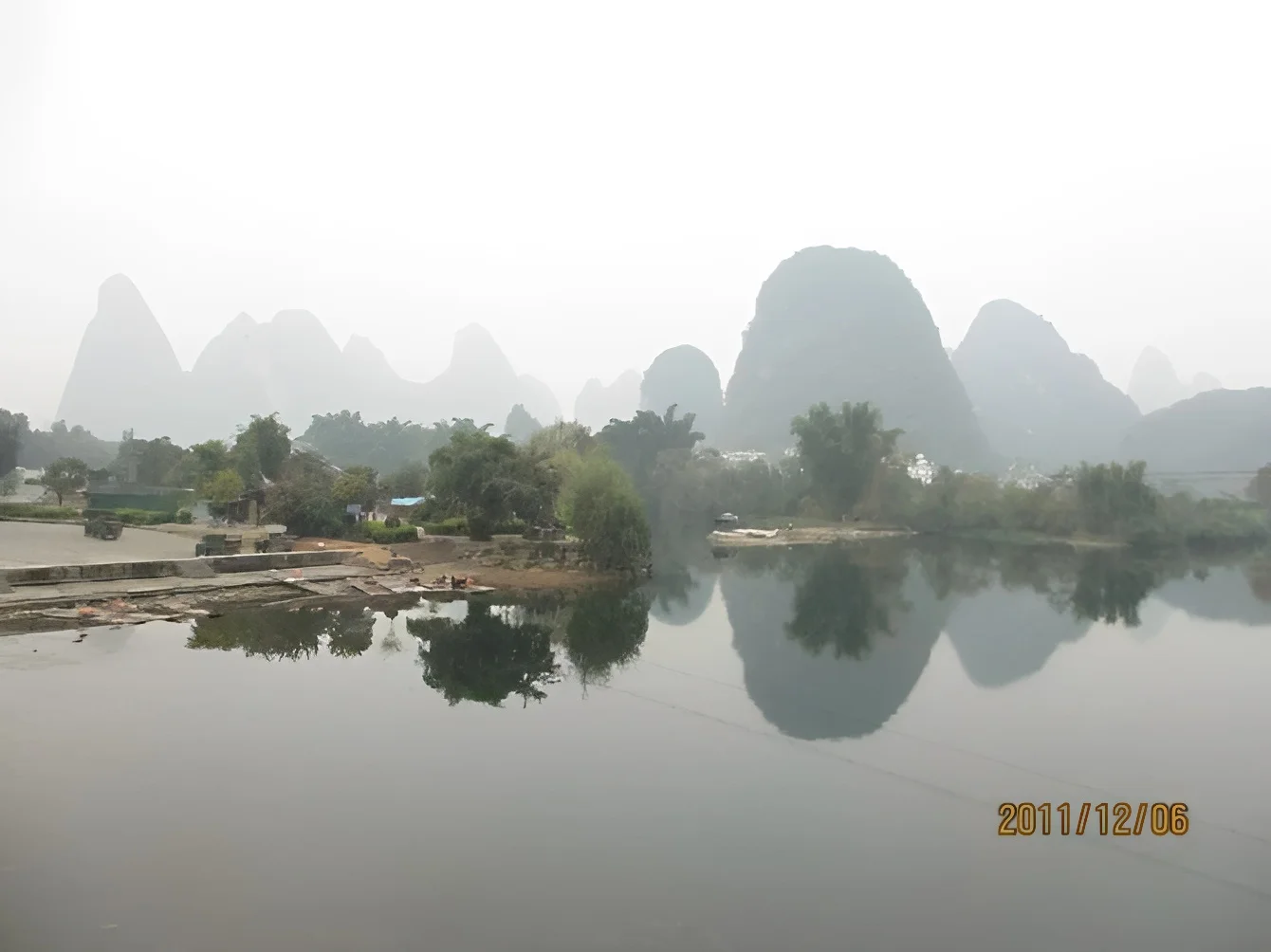
I visited Guilin and Yangshuo in December 2011. It was winter — the wrong season, supposedly. The air was cool and damp, mist hung low over the river, and the karst peaks appeared and disappeared like something half-remembered. It was one of the most beautiful places I have ever been.
What karst landscapes actually are
The peaks that define Guilin are not mountains in the usual sense. They are karst formations — limestone towers sculpted over hundreds of millions of years by water dissolving rock. The result is a landscape of near-vertical pillars rising from flat plains and riverbanks, each one a different shape, each one looking like it was placed there by a painter rather than by geology.
There is nothing else quite like it on this scale. Ha Long Bay in Vietnam comes close (same geology, different setting), but Guilin’s karst landscape stretches over a vast area of Guangxi province — along rivers, through rice paddies, behind villages, everywhere you look.
Chinese painters have been depicting these peaks for centuries. When you see a traditional ink-wash painting of impossible mountains rising from mist, it is not abstract. It is Guilin, painted from life.
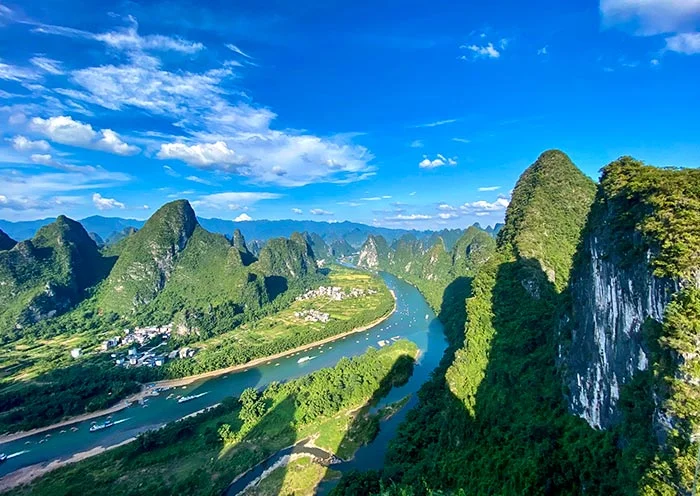
The Li River — the journey everyone should take
The classic Guilin experience is a boat cruise down the Li River (漓江, Lí Jiāng) from Guilin to Yangshuo, a journey of about 83 kilometres that takes four to five hours. The scenery along this stretch is what appears on the 20 RMB banknote — if you have Chinese currency in your wallet, you are carrying a picture of this river.
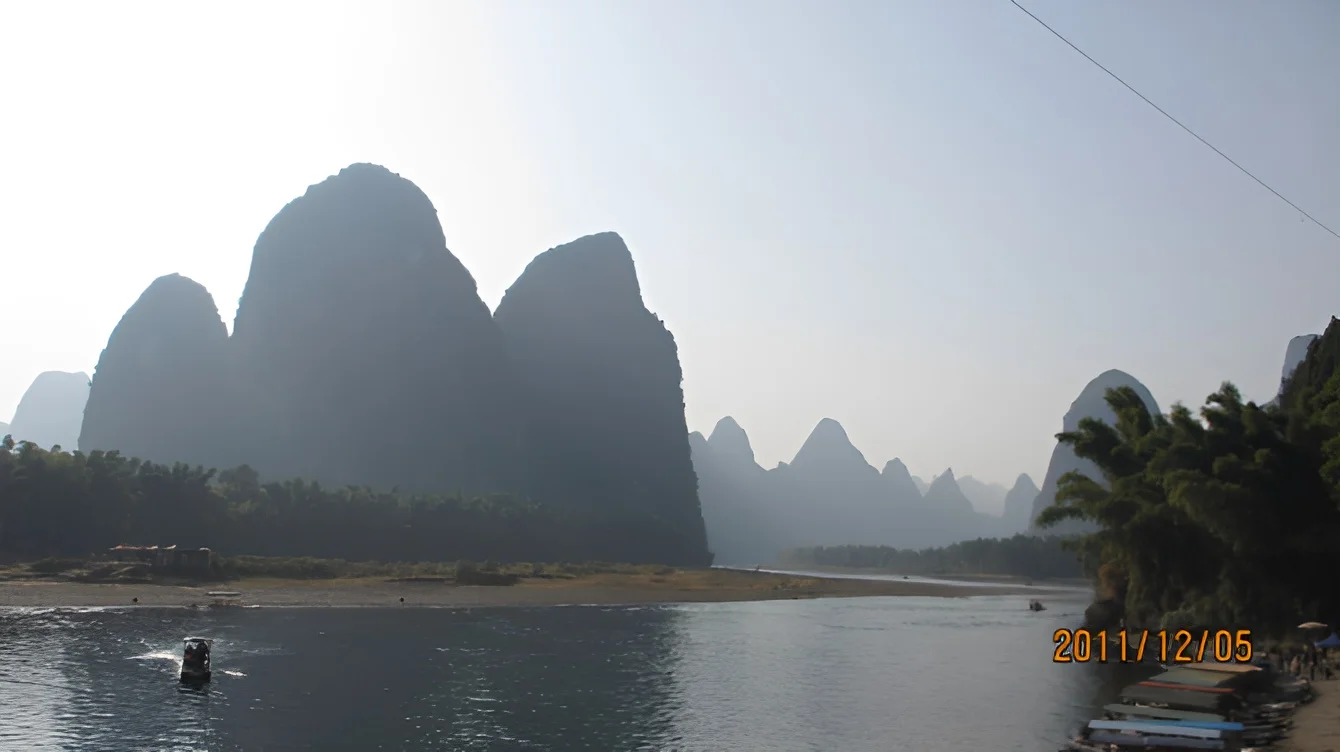
The peaks slide past on both sides, sometimes close enough to touch, sometimes receding into layers of mist. Water buffalo stand on the banks. Fishermen on bamboo rafts drift by. The river bends and each bend reveals a new composition of peaks and reflections that looks deliberately arranged.
I went in December, which is low season. The water was lower, the air was misty, and the tourist boats were less crowded. The mist, which might sound like a disadvantage, actually made everything more beautiful — the peaks faded into layers of grey and green, exactly like a Chinese ink painting. If you can handle cooler weather, winter is arguably the most atmospheric time to visit.
Practical tips for the cruise:
- Book through your hotel or a local agency. There are large tourist boats (more comfortable, fixed schedule) and smaller boats (more flexible, sometimes cheaper).
- The cruise runs one way — Guilin to Yangshuo. You do not need to return the same way. Most people stay in Yangshuo after arriving.
- Bring a jacket even in mild weather. It is cooler on the water.
Yangshuo — where the backpackers discovered China
Yangshuo (阳朔) is a small town at the end of the Li River cruise, and it has been one of China’s most popular destinations for both Chinese and international travellers for decades. It was one of the first places in China where backpackers gathered in large numbers, and West Street (西街, Xī Jiē) still has that feel — cafés, hostels, restaurants with English menus, and a relaxed pace that feels very different from Chinese cities.
But Yangshuo’s real attraction is what surrounds it. The karst peaks are everywhere — rising behind guesthouses, framing rice paddies, reflected in ponds. You can rent a bicycle and ride through the countryside along the Yulong River (遇龙河), a smaller, quieter tributary of the Li River, and pass through villages where the scenery is so absurdly beautiful it feels staged.
The area around Yangshuo is also excellent for rock climbing, which has become increasingly popular in recent years. The karst towers offer some of the best climbing in Asia, with routes for all levels.
The caves — a different world underground
The same limestone geology that creates the peaks above ground creates cave systems below. Guilin has several show caves open to visitors, lit with coloured lights in that uniquely Chinese style — pink, green, purple — that is either magical or excessive depending on your taste.
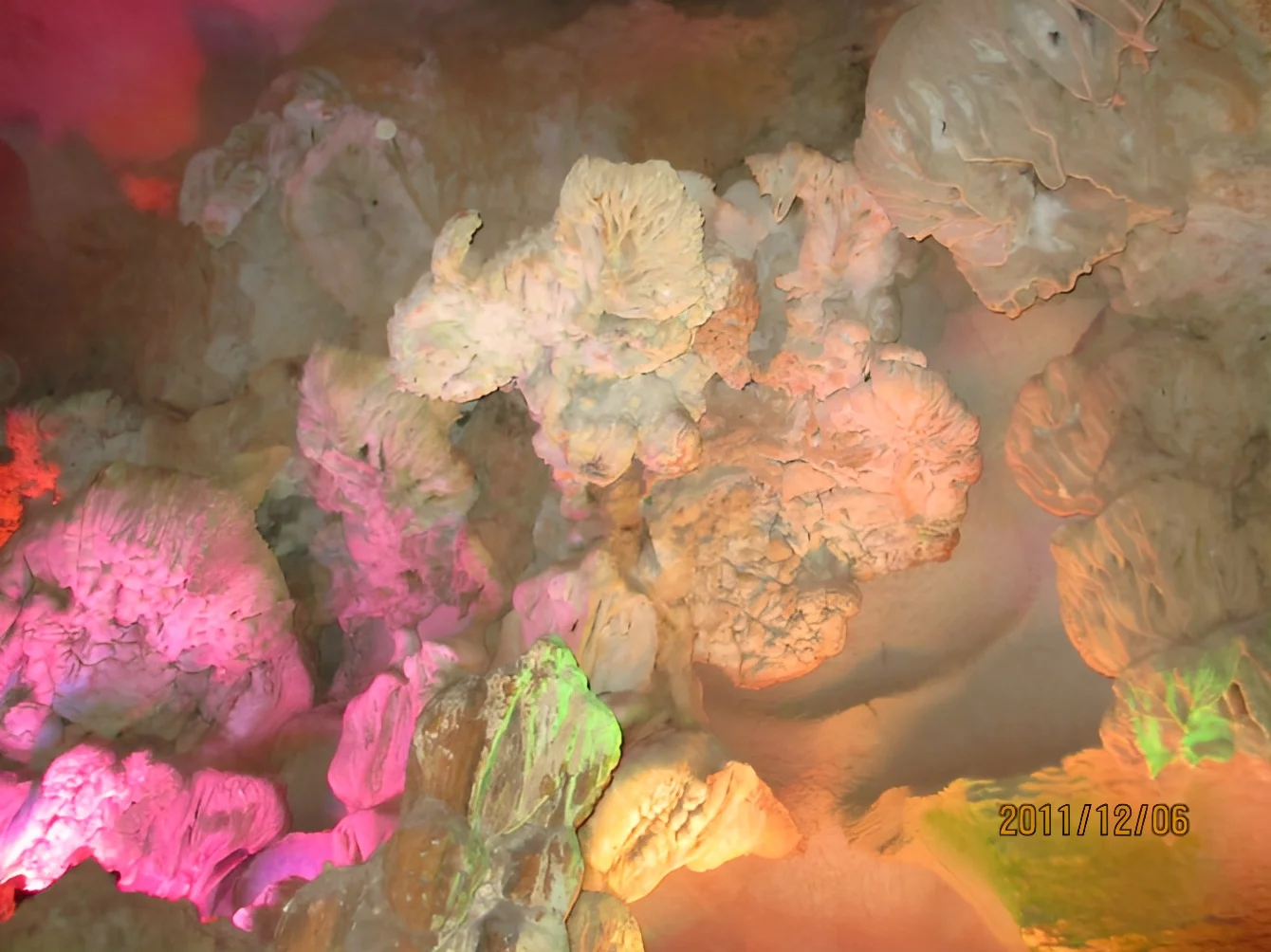
The most famous are Reed Flute Cave (芦笛岩, Lúdí Yán) and Silver Cave (银子岩, Yínzi Yán). The formations inside are genuinely spectacular — curtains of stalactites, underground pools, chambers large enough to hold concert halls. The coloured lights are kitsch, but the caves themselves are millions of years old and deeply impressive.
For Nordic visitors used to the restrained aesthetics of Scandinavian design, the neon-lit caves can be a culture shock. But lean into it. The Chinese approach to natural beauty is different — it adds, decorates, names every rock formation after something it resembles. It is not subtle, but it is joyful.
The food — Guangxi flavours
Guilin’s cuisine is milder than Sichuan but more flavourful than much of southern China. The signature dish is Guilin rice noodles (桂林米粉, Guìlín mǐfěn) — thin, slippery rice noodles served in a rich bone broth with pickled vegetables, peanuts, and sliced meat. Every local has their favourite noodle shop, and the dish costs almost nothing. It is one of the best breakfasts in China.
Other dishes to try:
- Beer fish (啤酒鱼) — a Yangshuo speciality. Fresh river fish braised in beer with tomatoes, peppers, and garlic. Simple, delicious, best eaten at a riverside restaurant.
- Stuffed snails (酿螺) — river snails stuffed with minced pork and spices, a Guilin street food.
- Oil tea (油茶) — a savoury tea-soup made by pounding tea leaves with ginger, garlic, and peanuts. An acquired taste, but very warming in winter.
Getting there and getting around
Guilin has its own airport with direct flights from most major Chinese cities. The high-speed rail station (桂林北站 or 桂林西站) connects to Guangzhou in about three hours, and to Shenzhen and Hong Kong beyond that.
From Guilin to Yangshuo, the Li River cruise is the scenic option. For speed, buses run frequently (about 90 minutes) and the high-speed train takes only 20 minutes to Yangshuo station (though the station is some distance from town centre).
In Yangshuo, the best way to explore is by bicycle or electric scooter. The roads through the countryside are flat, scenic, and relatively quiet.
Why Guilin matters
China has a lot of beautiful places. What makes Guilin special is that it shaped the Chinese idea of beauty itself. For centuries, this landscape has been the reference point for what “beautiful scenery” means in Chinese culture. The peaks, the river, the mist — they are not just natural features. They are cultural symbols, as deeply embedded in Chinese consciousness as the fjords are in Norwegian identity or the lakes are in Finnish.
When Chinese people see karst peaks in a painting, they feel something — a pull toward an ideal of nature that is peaceful, vertical, mysterious. Coming here, you are not just visiting a scenic area. You are stepping into the landscape that an entire civilisation considers the most beautiful on earth.
Whether it actually is the most beautiful is for you to decide. But standing by the Li River on a misty morning, watching the peaks emerge from the fog and double themselves in the water’s reflection — it is hard to argue.
If you are planning a trip to China, check whether you qualify for visa-free entry and read our first trip to China guide for practical preparation tips. For a very different Chinese city experience, see our guides to Beijing and Chengdu.