The Chinese Zodiac: 12 Animals, 60 Years, and Why Your Birthdate Changes Everything
A complete guide to the Chinese zodiac — the 12 animals, the five elements, the 60-year cycle, and why being born before Chinese New Year might change your sign entirely.
A few years ago, a Finnish colleague of mine came into the office visibly excited. She had just gotten a new tattoo — a small, elegant Dragon on her wrist. She’d been reading Dragon horoscopes for years, felt a deep kinship with the sign, and had finally decided to make it permanent. “I was born in 1988,” she told me, “so I’m a Dragon.”
I paused. I knew she was born on January 20, 1988. And I also knew that Chinese New Year in 1988 fell on February 17. She went completely pale when I explained it: she wasn’t a Dragon at all. She was a Rabbit — the year of the Fire Rabbit, to be precise. She had been reading the wrong horoscope for years and now had a permanent reminder of a sign that wasn’t hers.
This is more common than you’d think. Anyone born in January or early February needs to double-check their zodiac, because the Chinese calendar year does not begin on January 1.
What the Zodiac Actually Is
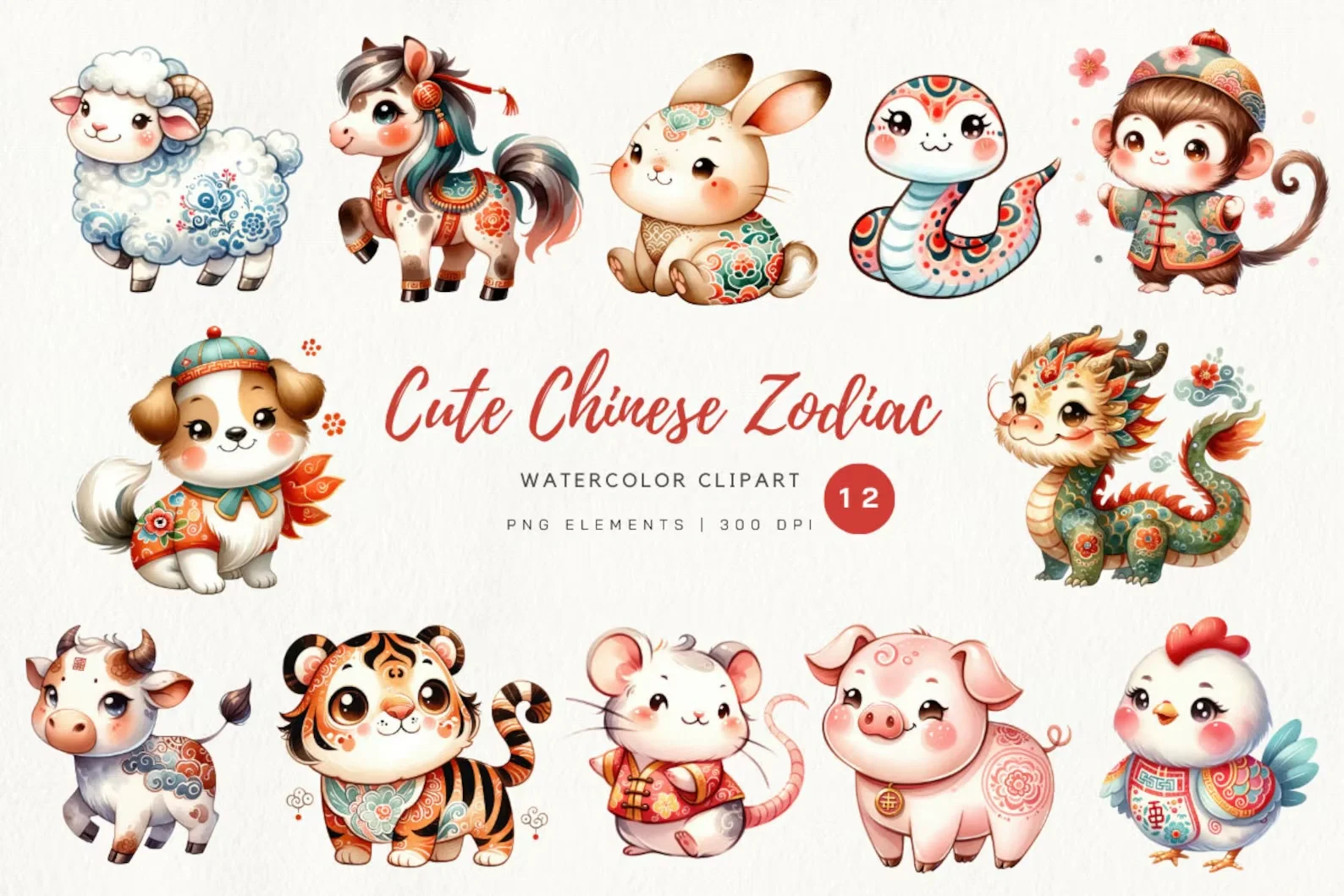
The Chinese zodiac is a 12-year cycle in which each year is associated with one of twelve animals: Rat, Ox, Tiger, Rabbit, Dragon, Snake, Horse, Goat, Monkey, Rooster, Dog, and Pig. It’s an ancient system — traceable back over two thousand years — and it sits at the heart of Chinese cultural life in a way that goes well beyond novelty placemats at Cantonese restaurants in Helsinki.
In China, everyone knows their zodiac sign. Not in the vague, half-joking way many Westerners know their star sign, but as a genuine piece of personal identity. Zodiac signs inform personality readings, compatibility assessments, business decisions, and baby naming. When I was growing up, my grandmother could rattle off the zodiac of every person in our extended family without hesitation. It was just ordinary knowledge, like knowing someone’s birthday.
The Great Race: How the Animals Were Chosen
The story behind the twelve animals is one of my favorites from Chinese mythology — partly because it’s genuinely funny if you read it carefully.
The Jade Emperor, ruler of heaven, announced a race: the first twelve animals to cross the great river would be immortalized in the calendar forever. The Rat, clever and quick to spot an advantage, convinced the kind-hearted Ox to carry him across. The Ox, strong and steady, powered through the current without complaint — only for the Rat to leap off his back at the very finish line and claim first place. The Ox arrived second, probably too dignified to complain. The Tiger came third, having fought the current with sheer strength, and the Rabbit came fourth, hopping across stepping stones and then a convenient floating log.
The Dragon, who could simply have flown, came fifth — because on the way, he stopped to bring rain to a drought-stricken village, and then paused again to blow a gust of wind to help a struggling Rabbit on a log. This tells you everything about the Dragon’s character. The Snake then pulled one of the race’s great acts of cunning: it coiled silently around the Horse’s leg, startling it at the finish, and slipped into sixth place while the Horse recovered in seventh. The Goat, Monkey, and Rooster arrived together on a raft they’d built and repaired cooperatively — the Emperor was so charmed by their teamwork that he placed them eighth, ninth, and tenth in the order they stepped ashore. The Dog came eleventh, having been thoroughly distracted by the river itself and stopped to splash around. The Pig arrived last, having eaten and then napped along the way.
The Cat, you’ll notice, is not in the zodiac at all. The Rat had promised to wake the Cat for the race — and simply didn’t. To this day, cats and rats don’t get along. Whether you believe this myth or not, it does explain a great deal about cats.
The 60-Year Cycle: Why Your Element Matters
Here’s where it gets more interesting than most Western introductions to the zodiac acknowledge. The 12 animals don’t just repeat on their own — they combine with a cycle of five elements: Wood, Fire, Earth, Metal, and Water. Since 12 and 10 (two years per element) share a least common multiple of 60, the full cycle takes 60 years to complete. This is the 干支 (gānzhī) system, the traditional Chinese calendar cycle.
A Wood Dragon (1964, 2024) is considered meaningfully different from a Fire Dragon (1976) or an Earth Dragon (1988). The element shades the animal’s core traits: a Fire Dragon burns brighter and more intensely, while a Wood Dragon is said to be more creative and outward-looking. In China, people who take the zodiac seriously — and many do — will tell you their full sign rather than just the animal. You don’t just say “I’m a Dragon.” You say “I’m an Earth Dragon” or “I’m a Fire Dragon.”
The Fire Horse (1966) is a particularly striking example. That combination is considered so intense, especially for women, that birth rates in Japan — which shares much of Chinese astrology — actually dipped noticeably that year, as some families quietly tried to avoid having a Fire Horse daughter. China saw the same phenomenon. Demography shaped by astrology is not something you encounter every day.
The Most Misunderstood Part: When the Year Actually Starts
Back to my colleague’s tattoo. The single most important thing to understand about the Chinese zodiac — and the thing almost every Western source gets wrong — is that the zodiac year begins on Chinese New Year, not on January 1.
Chinese New Year is a lunar holiday. It falls somewhere between January 21 and February 20, and the exact date shifts every single year. This means that if you were born in January or early February, you may well belong to the previous year’s zodiac sign, not the one listed next to your birth year in a simple table.
Take 1988. Chinese New Year fell on February 17 that year. If you were born on February 16, 1988, you were born in the final days of the year of the Fire Rabbit — not the Earth Dragon year that began the next day. If you were born on February 18, you are an Earth Dragon. Two days apart, entirely different signs. This is exactly what happened to my colleague: January 20 is before February 17, so she came into the world as a Rabbit, not a Dragon.
This is why a proper zodiac lookup must use the actual Chinese New Year date for the relevant year, not just a table that assigns each sign to a calendar year. There are no shortcuts here.
The Zodiac in Chinese Daily Life
For many Chinese people, the zodiac isn’t just a fun fact — it has real social weight. Checking zodiac compatibility before marriage is still common practice, especially outside major cities. Certain pairings carry a reputation for harmony: Rat and Ox complement each other well, as do Dragon and Rat. Others are considered fraught — Tiger and Monkey are said to clash, their temperaments too similar in the wrong ways.
Then there is 本命年 (běn mìng nián) — your zodiac year. Every twelve years, your birth animal returns, and many Chinese people consider this a year requiring special care. Counterintuitively, it’s not considered lucky. It’s seen as a year when you are in conflict with the Grand Duke Jupiter (太岁), the heavenly body associated with your sign, making you more vulnerable to bad luck, illness, and setbacks.
The traditional remedy is to wear red throughout the entire year — and specifically red underwear, preferably gifted by a family member, since a gift carries more protective power than something you buy yourself. I remember this vividly from childhood: every time a zodiac year rolled around, Chinese shops would put red underwear on prominent display near the entrance. I’ve seen the same thing here in Finland at the Chinese supermarket near my house every twelve years without fail. It’s one of those small, persistent continuities that remind me how deep these traditions run.
Check Your Own Zodiac — Properly
If you’ve made it this far, you now know more about the Chinese zodiac than most people who’ve had their fortune told by it. The key takeaways: you have both an animal and an element; they combine into a 60-year cycle; and if you were born in January or early February, please check the actual Chinese New Year date for your birth year before you decide on any permanent ink.
To find your real sign, Calculate your Chinese zodiac →
The full picture — animal plus element — gives a surprisingly nuanced portrait. Not destiny, and I wouldn’t stake any major life decisions on it. But as a lens for self-reflection, one that roughly two billion people have found meaningful across thousands of years? There’s something in it worth understanding, even just to know the story behind it.