Chinese Tea Culture: It's Nothing Like What You Think
Tea in China isn't a ceremony — it's daily life. From gongfu cha to grandpa-style mugs, here's what tea actually means to Chinese people, from someone who grew up drinking it.
Every office in China has that person — the one with a glass jar half-full of tea leaves on their desk, refilled with hot water from the communal dispenser four or five times a day. No teapot, no ceremony, no fuss. Just leaves and water.
That is Chinese tea at its most honest. Not the ceremony Westerners picture, not the Instagram-perfect gongfu setup with steam curling through golden light. Just a person drinking tea the way a Finn drinks coffee — constantly, quietly, as background to everything else.
The tea I grew up with
When I was a kid, my family didn’t really drink tea. We couldn’t afford to. Tea — decent tea, anyway — was not cheap, and there were more pressing things to spend money on. The tea that sat in our cupboard came out for Spring Festival and maybe Mid-Autumn, when relatives visited and you needed to put something on the table. The rest of the year, it was hot water. Plain hot water, from a thermos. That’s what most people around us drank.
When we did have tea, it was jasmine tea (茉莉花茶). Not the fancy kind. The cheapest bag from the market — dried green tea leaves scented with jasmine flowers, the petals still mixed in. It smelled better than it tasted, if I’m honest. But that smell — warm, floral, a little dusty — that was what “having guests over” smelled like in our home.
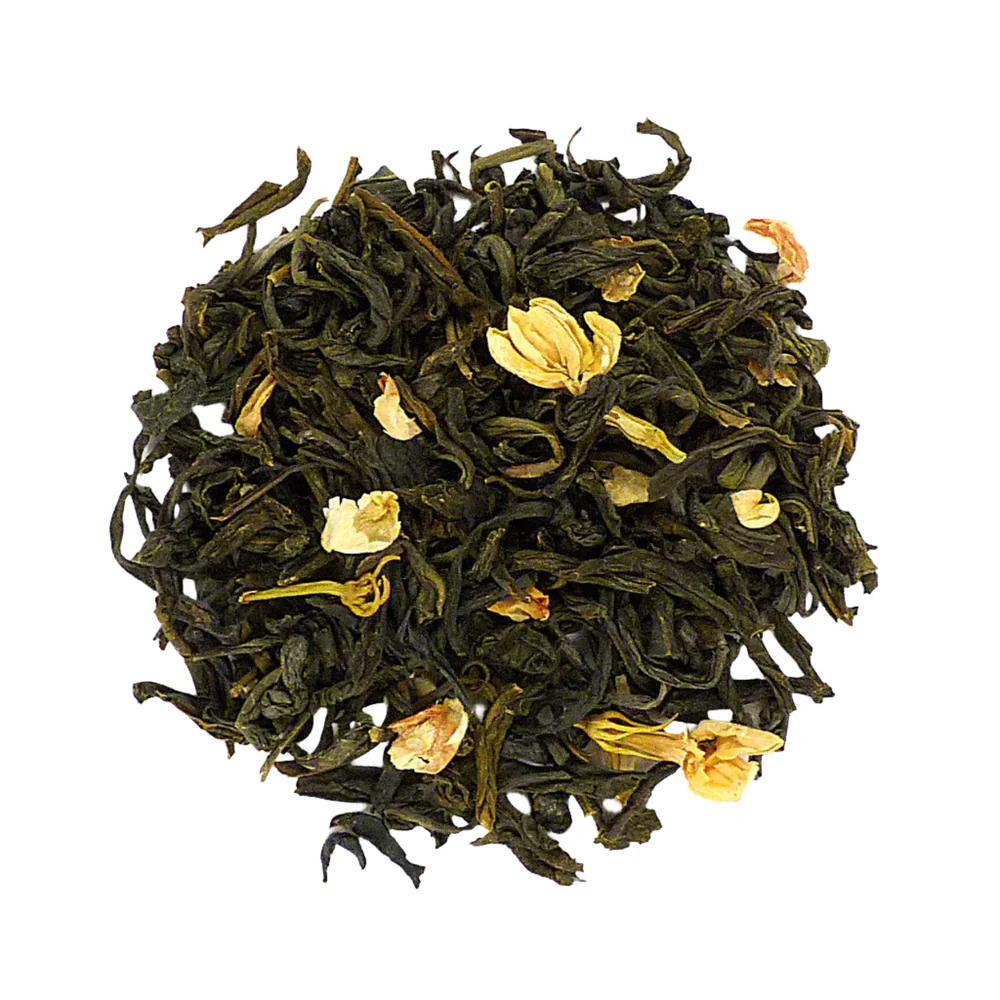
Jasmine tea is the tea of ordinary Chinese people. It’s what Beijing taxi drivers drink. It’s what your grandparents keep in a tin on top of the fridge. The tea world doesn’t talk about it much — it’s too cheap, too common, not prestigious enough. But if you want to understand Chinese tea culture honestly, you start with jasmine, not Longjing.
I didn’t discover “good” tea until I was older and earning my own money. The first time I tried a proper Tieguanyin, brewed gongfu style in a colleague’s office, I remember thinking: this is a completely different thing. The floral smell that filled the whole room before I even took a sip, and then this layered taste — orchid first, then something sweet, and an aftertaste that just stayed. I sat there holding this tiny cup thinking, okay, I get it now.
These days I drink green tea most mornings and Tieguanyin when I want to slow down. But I haven’t forgotten that jasmine tea was where it started.
What tea actually means here
If your mental image of Chinese tea involves a kimono (that’s Japanese), a teabag (that’s British), or sugar and milk — let me reset that.
In China, tea is loose-leaf. It is not sweetened. Milk goes nowhere near it. You put leaves in a vessel, add hot water, and drink. The leaves stay in the water. You drink around them, or through them. You get used to it.
China produces and consumes more tea than any country on earth, and has for over two thousand years. But here’s the thing that gets lost in all the history and ceremony talk: for most ordinary Chinese people, tea is not a luxury. It’s just what you drink. The way Finns drink coffee — not because it’s special, but because it’s there, and the day doesn’t feel right without it. Finland has one of the highest coffee consumption rates in the world. Every workplace has a machine. Every visit starts with “kahvitellaan?” Tea in China fills exactly the same role.
The difference is variety. Where Finland has light roast and dark roast, China has thousands of teas from dozens of provinces, and people have opinions. Bring up tea at a dinner table and watch someone from Fujian argue with someone from Zhejiang for twenty minutes about water temperature.
The six types (briefly)
All Chinese tea comes from the same plant: Camellia sinensis. The difference is processing — how much the leaves are oxidised after picking. Same plant, wildly different results.
Green tea (绿茶) — Unoxidised, fresh. The most common type by far. Longjing (Dragon Well) from Hangzhou is the famous one. A good Longjing tastes grassy, slightly sweet, almost buttery. This is my everyday tea now — a big step up from the jasmine of my childhood, though I still keep jasmine around for nostalgia.
Oolong tea (乌龙茶) — Partially oxidised, between green and black. This is where Tieguanyin (铁观音) lives, and Tieguanyin is the tea that changed how I think about tea. I’ve already gone on about it. I’ll stop. But if you only try one Chinese tea, try this one. The good stuff is from Anxi in Fujian province. Ask for “清香型” (light fragrance style) if you want the floral version.
Black tea (红茶) — China actually calls this “red tea” because the name refers to the liquid colour, not the dry leaves. What China calls “black tea” (黑茶) is a different thing entirely (see below). Keemun and Lapsang Souchong are the famous ones. Rich, warming, the closest to what Europeans think of as “tea.”
Dark tea / Pu’er (黑茶 / 普洱茶) — Fermented, aged, sometimes for decades. Compressed into cakes and traded with vintage years. Collectors spend absurd money on old pu’er. I don’t really drink it — the earthy taste isn’t my thing — but people who love it really love it.
White tea (白茶) and yellow tea (黄茶) exist too. White tea is subtle and delicate, from Fujian. Yellow tea is so rare that most Chinese people have never had it. I won’t pretend I know much about either.
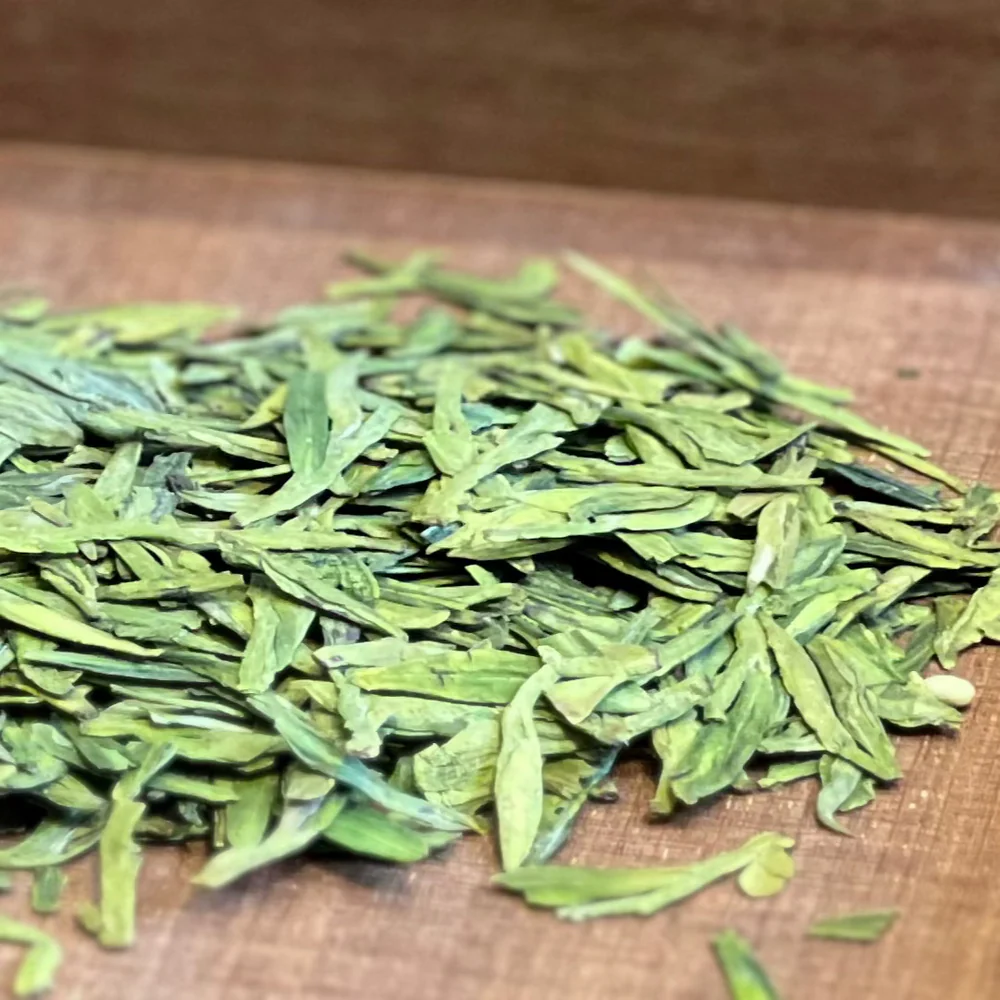
Longjing (Dragon Well) — my everyday tea, from Hangzhou
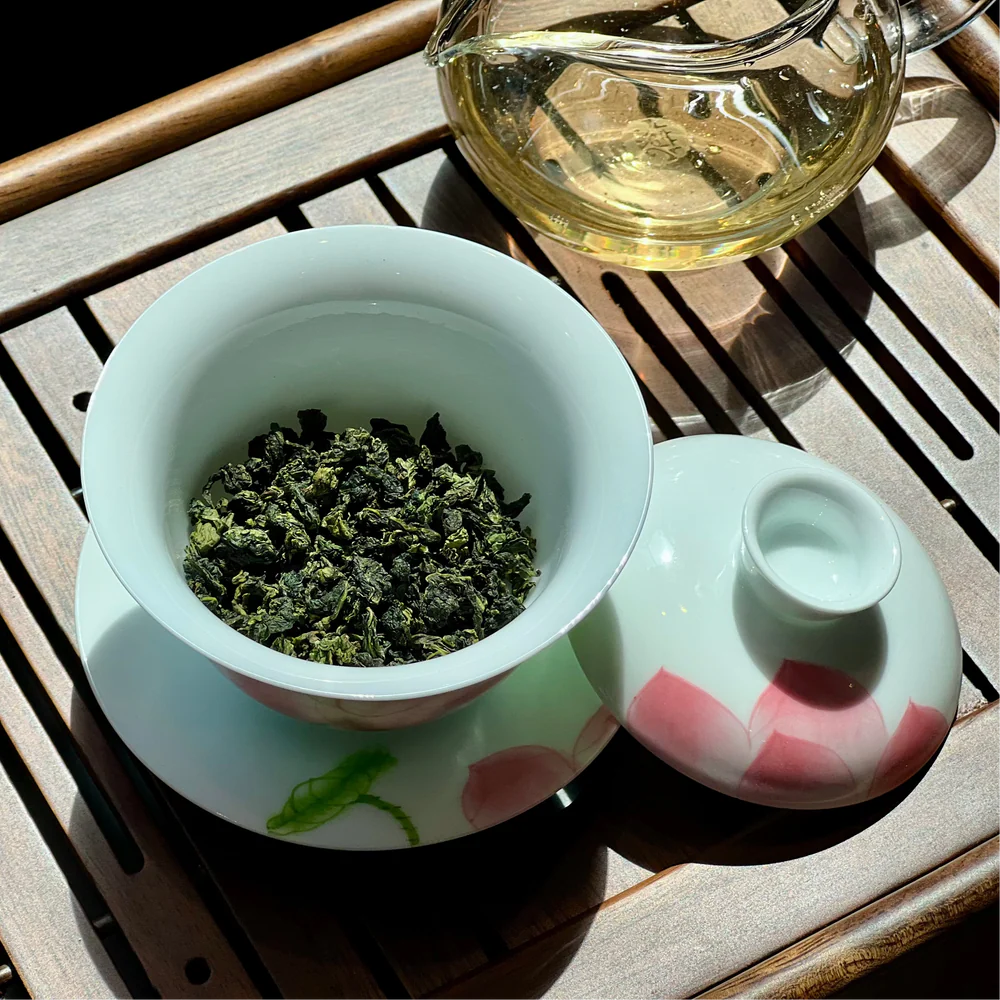
Tieguanyin — the one that made me understand what tea could be
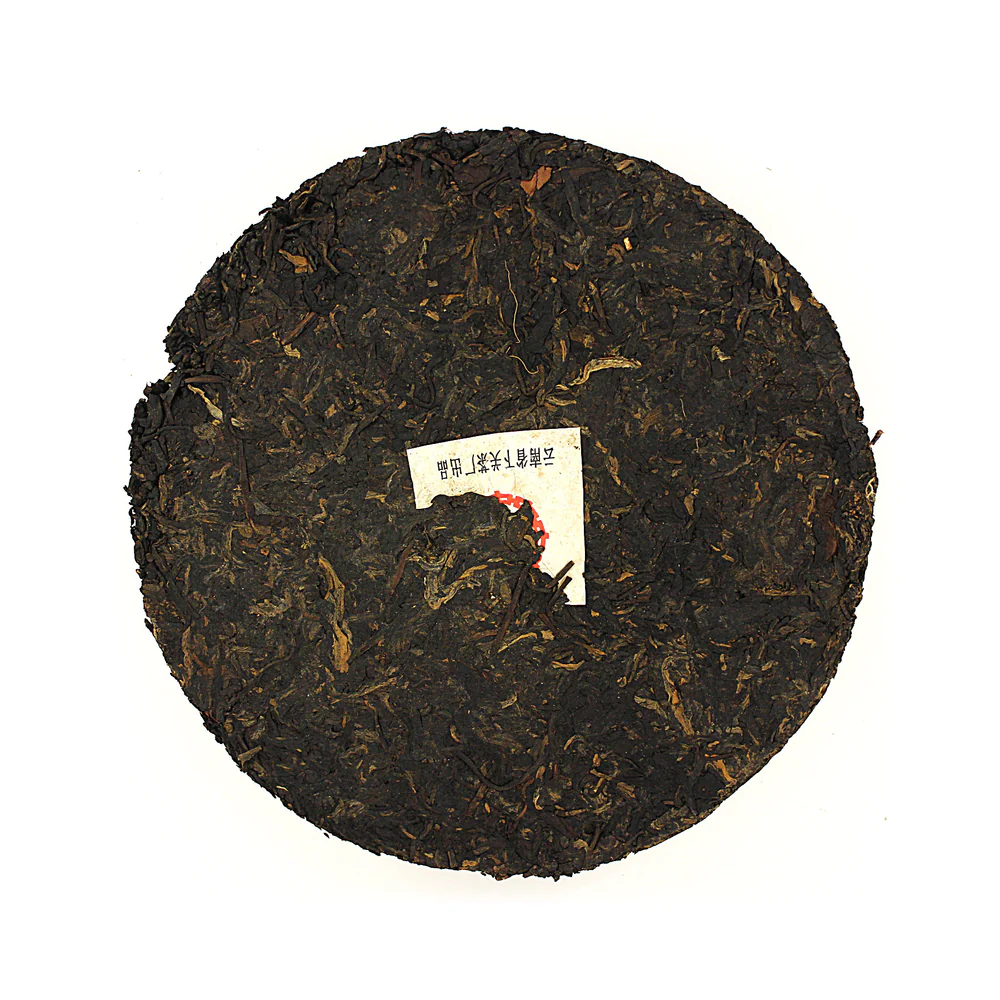
Pu'er — aged, compressed, and not really my thing, but people go crazy for it
How people actually drink tea
Forget the ceremony. Here’s reality.
Grandpa style
This is how most Chinese people drink tea, most of the time. Leaves go directly into a tall glass or a lidded mug. Hot water goes in. You drink. When the water gets low, you add more. The leaves sit in there all day, getting weaker, until you dump them and start fresh tomorrow.
It’s called “grandpa style” because — well, that’s what grandfathers do. And taxi drivers. And security guards. And every office worker with that glass jar. My father drinks tea this way. Has for decades. Same jar, same ritual. I don’t think he’s ever used a teapot in his life.
You learn to sip without getting a mouthful of leaves. It takes practice.
Gongfu cha (功夫茶)
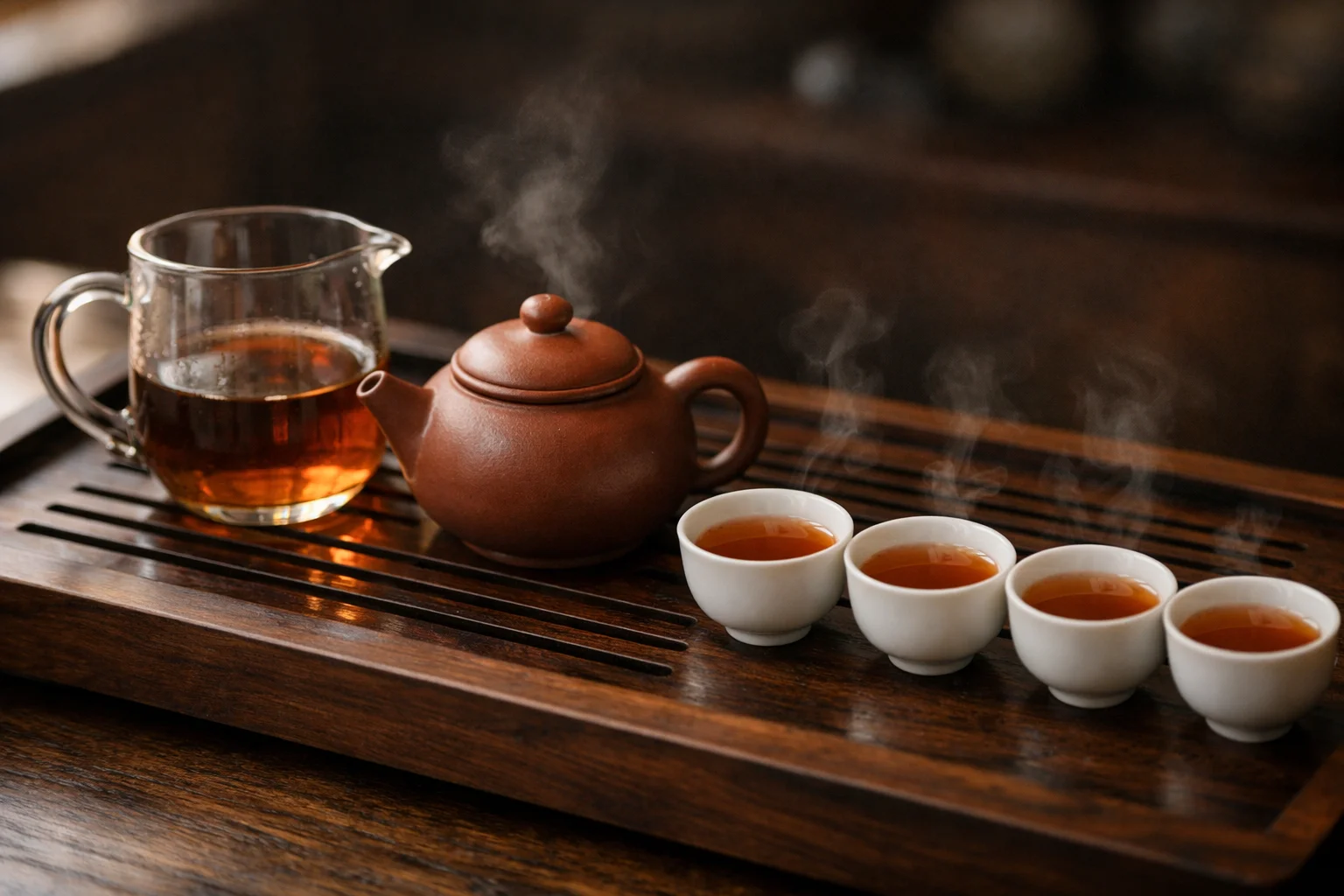
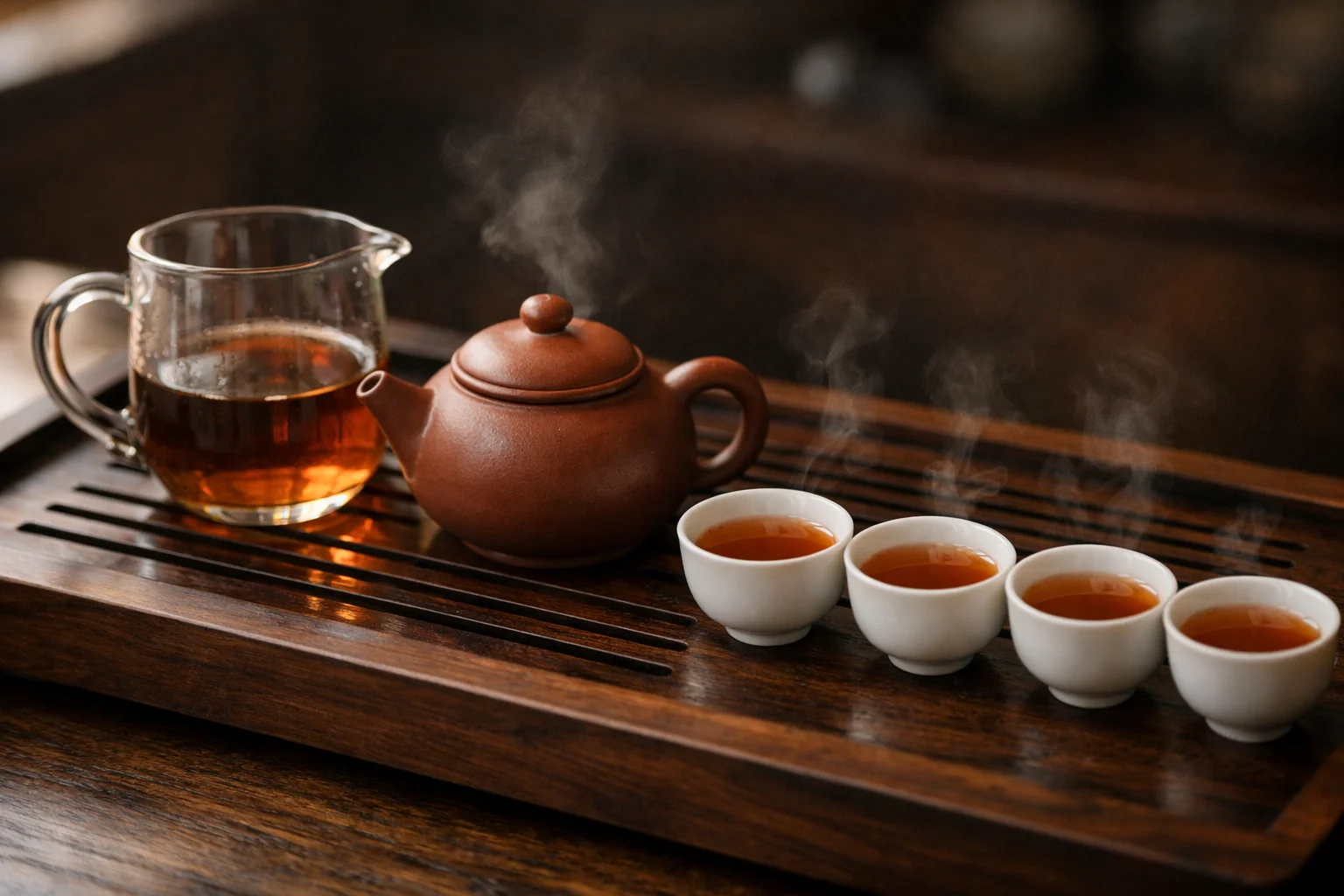
The small teapot, the tiny cups, the wooden tea tray, the multiple infusions. Gōngfu means skill or effort — tea brewed with care. High ratio of leaves to water, steep for just seconds, pour, repeat. A good oolong gives you eight or ten rounds, each one different.
Here’s what nobody explains: in Fujian and Guangdong, this is not a performance. It’s not something you do for special occasions. Walk into a mobile phone shop in Chaozhou and the owner will be sitting behind a tea tray, brewing gongfu style, drinking alone. It’s as unremarkable as making a cup of instant coffee in an office kitchen.
The first infusion gets thrown away. It “wakes up” the leaves. Westerners always look horrified when they see this. You get used to that reaction too.
The thermos
The third way: a large insulated flask with a built-in strainer. Every train journey, every park bench where an old man sits, every office break room. If you ride a Chinese train, look around. Half the passengers have a thermos. The other half have a glass jar.
Tea as social glue
When a guest arrives at a Chinese home, tea comes out before anything else. Before food, before small talk, before the reason for the visit. “坐,喝茶” — sit, drink tea. That’s the opening line.
In business, every meeting starts with someone pouring tea. The tea might be terrible — bulk jasmine from a thermos, poured into paper cups. But it’s always there. It says: we’re being civilised, we acknowledge each other.
There’s a gesture you should know. When someone pours tea for you, tap two fingers on the table next to your cup. It means thank you. Everyone in China does it. I have no idea when I learned it — it’s just something you absorb, like saying “kiitos” when someone holds a door.
In Chengdu, tea houses are a way of life. People spend whole afternoons in bamboo chairs — covered-bowl tea, mahjong, gossip, napping. The tea house works as a public living room. I’ve sometimes thought it serves a similar function to sauna in Finland: a communal space where time deliberately slows down.
Buying tea without getting ripped off
Tea shops in China have no visible prices. The shopkeeper sits you down, brews sample after sample, talks about each one with real passion. It’s nice. But it can also get expensive fast if you don’t know the landscape.
Some things to know:
Tea costs anywhere from ¥50 to ¥50,000 per kilogram. The range is ridiculous. For a visitor, ¥200–500 for a box (50–100g) gets you something genuinely good. Beyond that you’re paying for prestige, not taste.
In tourist areas — especially near the Forbidden City in Beijing — strangers may invite you to a “tea ceremony.” Friendly conversation, nice tea, then a bill for ¥800. It’s a scam. Real tea tastings in actual shops are free. If someone approaches you on the street to drink tea, walk away.
If you want zero risk: Wu Yu Tai (吴裕泰) and Zhang Yi Yuan (张一元) are old Beijing chains with fixed prices. They’ve been around for over a century. You won’t get cheated and the tea is solid.
For a first purchase, I’d say Tieguanyin if you like floral and complex, or Longjing if you want something clean and light. Both will show you the distance between real Chinese tea and a teabag.
Making tea in a Finnish kitchen
Finland is a coffee country. The tea options here are… limited.
Chinese tea in Finnish supermarkets is mostly green tea bags and jasmine tea bags. In Asian restaurants, you get jasmine tea with your meal. Both are fine. But they represent Chinese tea the way instant coffee represents what you get at a Helsinki specialty roastery.
I brought Tieguanyin back from China on my last visit. I have a small gongfu set in my kitchen now — nothing fancy, a clay pot and a few cups. Making tea has become a ten-minute ritual on slow mornings. Warming the pot, rinsing the leaves, pouring those tiny cups while the flat fills with that orchid smell. For those ten minutes I’m not in Finland. I’m back somewhere familiar, in someone’s office, being handed a cup and told to sit.
It’s funny — I grew up in a family that could barely afford tea, and now I’m here on the other side of the world, brewing it carefully in small cups like some kind of connoisseur. My mother would find this very amusing.
If you visit China, bring tea home. Not as a souvenir to sit on a shelf. As something you’ll actually drink. A sealed tin of good oolong or green tea lasts months and costs less than a dinner out. And when you’re standing in your kitchen in November, grey sky outside, waiting for the water to cool to eighty degrees — you’ll know exactly where you are and where the tea came from. That’s worth something.
Curious about more Chinese traditions? Read about the Chinese Zodiac or our guide to Chinese New Year. And if you’re planning a trip, the tea houses of Chengdu are reason enough to go.